
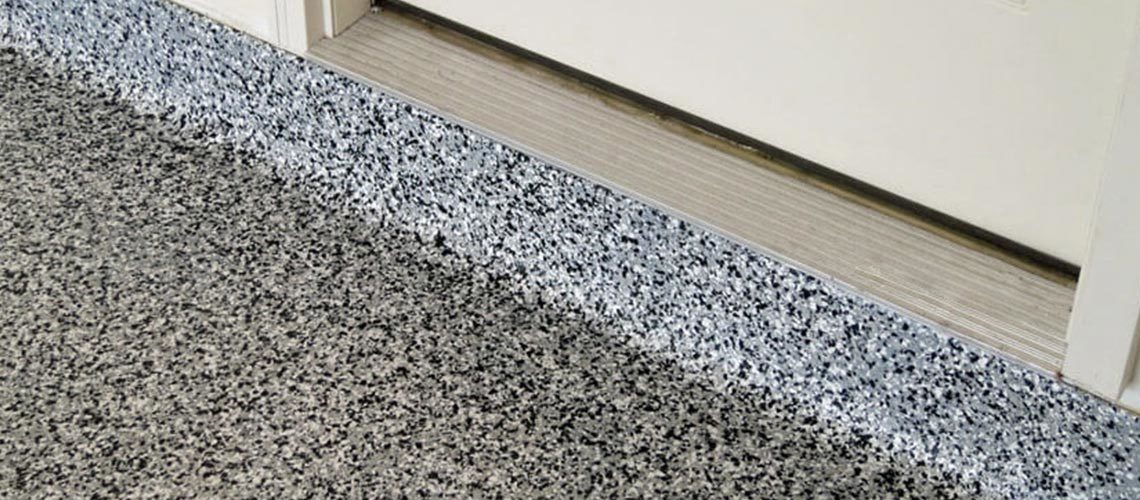
Epoxy Cove Base: Material, Detail, & Installation
Use Case Detail & Information
Integral monolithic epoxy cove bases are generally installed to improve sanitation, cleanliness, wall surface protection, or waterproofing in potentially wet environments, such as kitchens, dishwashing areas, laboratories, hospitals, etc.
Table of Contents
Types of Epoxy Cove Bases:
- Radius (or Sanitary) Cove Base: Typically applied at 1/8″ to 3/8″ thickness and applied 4″ to 6″ up the wall.
- Utility (also known as Cant or Chamfer) Cove: Typically applied at a 45° angle anywhere from 3/4″ x 3/4″ to 6″ wide x 6″ high.
General Installation Recommendations for Epoxy Cove Bases:
- A cove base can be installed over most solid wall surfaces including concrete, drywall, CMU, plywood, ceramic tile, or other structurally sound surfaces. All stable surfaces need to be properly cleaned and abraded in order to improve adhesion.
- The cove base should always be installed prior to the application of the floor coating. The topcoat that is used can then be applied to both the cove and epoxy basecoat.
- Priming is recommended at about 160 square feet per gallon. We also suggest a light broadcast of our #6 Broadcast Silica be thrown into the primer while the primer is still tacky. This will help improve vertical build and adhesion of the epoxy cove base material.
- To help maintain the correct height and even thickness of Radius cove bases a terrazzo strip or Thermal-Chem’s “L” shaped adhesive-backed 3/8″ x 1/2″ by 6′ DecoStrips can be used.
- Aggregate loading for Radius coves should be around 7.5:1 (Sand to Resin) by weight. Our 726 CV kits are premeasured cove kits that contain 72 oz of mixed resin with a 33lb bag of our #5 Trowel Silica and cover approximately 25 Linear Feet of 4″ cove.