

How to Find Industrial Shutdown Flooring Jobs Others Miss
The Short Answer
Most flooring contractors compete for the same planned shutdown bids: the projects scoped months ago, budgeted early, and sent out to multiple contractors. The work that is often easier to win is the work nobody else is pitching: jobs that came loose after a plan fell through, and floors that clearly need help at facilities that never put flooring on the project list.
Table of Contents
The contractors who win consistently are not only outbidding competitors on formal projects. They are finding the unpitched ones, targeting facilities where a decision can still be made, and showing up with a schedule, a system, and a manufacturer partner that can help make the window work.
This guide is for two groups of contractors: those who already do industrial shutdown flooring and want a better pipeline, and those coming from commercial or residential coatings who want a realistic entry point into industrial work. The opening is real, and it is usually in the jobs the established players overlook.
| The best way to find industrial shutdown flooring jobs is to look beyond formal bids. Target smaller and mid-size facilities, contact maintenance managers, ask what floor areas did not make the shutdown list, and be ready to propose a contained repair that fits the facility window. |
Why Shutdown Flooring Work Matters
Most manufacturing and industrial facilities shut down production for a limited period each year to complete maintenance, retooling, deep cleaning, inventory, repairs, or vacation coverage. In many plants, that window is the only realistic time to complete work that requires extended floor downtime.
Flooring work is often tied to that window because surface prep, coating application, and cure time are difficult to manage during production. Forklift traffic, washdowns, chemical exposure, sanitation requirements, employee traffic, and equipment movement all make scheduling critical.
For facilities evaluating floor hazards, OSHA’s walking-working surfaces guidance can also help teams think through trip risks, damaged walking surfaces, and safer work areas.
That is why industrial shutdown flooring work can be some of the most valuable work a contractor can pursue. The facility has a hard deadline. Downtime is expensive. The right contractor, backed by the right manufacturer, can solve a problem the facility may not have time to keep shopping.
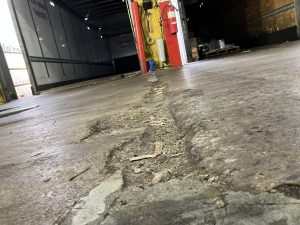
Industrial floor damage in a high-traffic area can become a shutdown opportunity when the contractor connects the repair to uptime, safety, sanitation, or production.
Why Most Contractors Miss the Best Shutdown Jobs
Most contractors fish in the same pond. They look for the planned, budgeted projects that were scoped months ago, sent to bid, and reviewed by purchasing. Those jobs are visible, formal, and crowded. By the time they reach the contractor market, the facility may already be comparing numbers instead of looking for the best solution.
The stronger opportunity is the work that never gets advertised. In the field, overlooked shutdown work usually falls into two categories.
The Job That Just Came Loose
Plans break between the spring bid and the actual shutdown. The selected contractor cannot hit the window because another project ran long. A closer look at the floor expands the scope. A small problem becomes an urgent one. Procurement stalls over insurance, references, pricing, or lead time.
When that happens, the facility has a fixed shutdown date and a problem they thought was handled. They are motivated. They are usually less price-sensitive than a buyer comparing planned bids months out because the alternative is missing the only window they may get all year.
What wins that job is certainty: a day-by-day schedule, a system that fits the available return-to-service window, crew availability, material availability, and a manufacturer that can help the contractor confirm technical requirements and shipment timing before the contractor promises the date.
| On shutdown work, the coating manufacturer is part of the schedule. If the system is wrong, the cure window does not fit, or materials do not arrive when promised, the contractor owns the problem in the customer’s eyes. That is why system selection and shipment timing need to be confirmed before the contractor commits. |
The Floor That Needs Work But Is Not on the List
This is the bigger opportunity. Many facilities have a shutdown already scheduled but never put flooring on the project list. Not because the floor is fine. Because nobody inside the building made the case.
The failing area by the loading dock has been bad for years. The patched traffic aisle gets worse every quarter. The washdown area keeps breaking down. The maintenance team works around it because the problem feels normal.
A contractor who walks the floor, documents what is failing, explains what that area may look like in twelve months, and proposes a contained repair that fits the existing shutdown can create a job that never goes to bid. Not a full building re-coat. A high-traffic aisle. A dock transition. A process area. A sanitation-sensitive zone. Real, winnable, and uncontested.
When contractors look for industrial shutdown flooring jobs late in the season, the strongest targets are often facilities with visible floor problems, flexible decision-makers, and a shutdown window already on the calendar.
Where to Look First
The best targets for industrial shutdown flooring jobs are not always the biggest names. For late-season, late-add, and overlooked shutdown work, weight your effort toward smaller and mid-size facilities where a real decision can still be made.
| Target Facility | Why It Can Be a Good Fit | Likely Floor Problem | Best Opening Question |
| Food processing and packaging plants | Shutdowns, sanitation requirements, washdowns, heavy traffic | Deteriorated process floors, thermal shock, wet areas, patched concrete | Is there any floor area that keeps creating sanitation or maintenance headaches? |
| Cold storage and refrigerated facilities | Limited repair windows and harsh service conditions | Cracking, spalling, moisture, thermal cycling | Do any freezer or dock areas need attention while traffic is lighter? |
| Machine shops and small manufacturers | Often under-pitched and maintenance-led | Oil exposure, traffic aisles, worn coating, concrete damage | What floor areas are getting worse but never make the capital list? |
| Warehouses and distribution centers | Forklift traffic makes floor failures visible and costly | Dock transitions, aisle wear, joint failure, impact damage | Where are forklifts, pallet jacks, or dock traffic beating up the floor? |
| Older industrial buildings | Deferred maintenance and recurring patch failures | Worn coating, contamination, uneven repairs, trip hazards | What has been repaired before but keeps coming back? |
The Most Winnable Facility Profile
The sweet spot is often a smaller or mid-size industrial facility, roughly 50 to 250 employees, where the maintenance manager or facilities manager has real influence over contained projects.
Large plants usually run formal capital planning, project managers, procurement gates, and budget cycles. By late in the shutdown cycle, many decisions are locked. Smaller facilities are often more flexible. There may not be a formal capital list that closed months ago. The maintenance manager may effectively be the planning department.
That creates two advantages for contractors. First, a decision can still be made late in the cycle. Second, these facilities are under-pitched. Most competitors chase the big logos. The 80-person plant in the industrial park may rarely get a knowledgeable flooring contractor walking the floor, which means less competition and a maintenance manager who may be glad someone finally showed up with a practical fix.
Who to Talk To
Start with the maintenance manager or facilities manager. In the facilities most likely to approve a contained industrial shutdown flooring project quickly, they usually know the floor better than anyone. They know which areas are failing, what was patched last year, where forklift traffic is destroying the floor, and what has become a daily operational headache.
Going too high can slow the conversation down. The VP of operations or plant manager may route you back to maintenance anyway. Win the maintenance contact first, give them a clear business case, and make it easy for them to advocate internally.
What to Ask During a 10-Minute Walkthrough
- What floor work is already planned for the shutdown?
- What areas did not make the list but keep getting worse?
- Where are forklifts, pallet jacks, washdowns, chemicals, moisture, or impact causing recurring damage?
- What has been patched before but failed again?
- How many days, or hours, can this area realistically be out of service?
- Is this a safety, sanitation, maintenance, production, or appearance problem?
- If this waits another year, what gets harder or more expensive?
How to Pitch It Without Sounding Like Everyone Else
Do not lead with “we install flooring.” Lead with timing, risk, and the overlooked gap in their shutdown plan.
| Contractor call script “I work with commercial facilities on floor repairs during shutdown windows. I know your shutdown is probably already planned. I am reaching out because plans sometimes shift: a contractor falls through, the scope changes, or a floor problem gets worse than expected. If your flooring is locked and on track, no problem. But if anything has come loose, or if there is an area that did not make the list but is actively failing, I can move quickly and I have a manufacturer behind me that offers technical support, rapid-cure system guidance, and same-day shipping on more than 90% of orders. Would a 10-minute walkthrough be worth it?” |
That message works because it respects the fact that the facility has already planned. It does not sound like a generic cold call. It surfaces both categories of overlooked work and plants a flag for next year even if this year is already set.
| Contractor positioning tip Do not sell a floor coating first. Sell control of the shutdown window. The facility cares about whether the work can be completed without extending downtime, missing production restart, or creating a bigger maintenance problem. |
Is It Too Late to Win Industrial Shutdown Flooring Jobs?
| Direct answer For formal, budgeted shutdown projects, it may be too late once contractors have already been selected. But it may not be too late for fallout jobs, late-add repairs, or failing floor areas that were not originally scoped. |
For planned, budgeted work, the realistic window often closes earlier than contractors expect. Budgets may be set, scopes may be approved, and vendors may be selected months before the shutdown.
But the two kinds of overlooked work do not follow that calendar. Fallout jobs come loose because it is late. Unlisted-but-obvious work depends on a maintenance manager’s judgment, not always a closed bid cycle.
Every conversation also becomes a head start on next year. A contractor who walked the floor in the off-season, documented the problem, and stayed useful is often the contractor the facility calls first because they have already been in the building.
In other words, it is rarely too late to create opportunity. It is only too late to win the work the same way everyone else is trying to win it.
The Right Coating System Makes Overlooked Jobs Possible
A recurring reason late-add and fallout jobs fail is cure time. When a floor repair gets squeezed into a shutdown window that is already tight, a standard epoxy system may not fit the available downtime.
Rapid-cure systems exist for these situations. Depending on the service environment, substrate conditions, temperature, traffic, and performance requirements, fast-cure polyaspartic, MMA, epoxy, or urethane cement systems may help contractors fit a repair into a compressed shutdown window.
Where technically appropriate, rapid-cure systems can make a meaningful difference because some systems can be forklift-traffic ready inside 24 hours. That kind of return-to-service detail matters to a contractor trying to win a late-add job, because it changes the conversation from “we cannot fit this in” to “here is the system and schedule that may make it possible.”
This is where a manufacturer partner earns its keep. Before you commit to a return-to-service date, confirm the system, surface prep requirements, cure profile, environmental limitations, and material availability. On a shutdown job, a wrong system or delayed shipment does not just cost margin. It can cost the relationship.
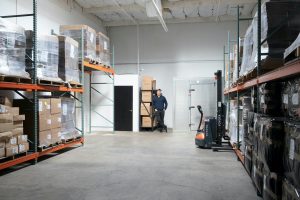
The right manufacturer-backed system helps contractors match the industrial floor coating system to the facility environment and shutdown window before committing to a date.
5 Places to Look for Overlooked Shutdown Flooring Jobs This Month
- Industrial parks with smaller manufacturers: Look for facilities that may not have formal capital planning but clearly have production traffic and maintenance needs.
- Food and packaging plants: Ask about washdown areas, sanitation-sensitive zones, and floor failures that create cleaning or maintenance issues.
- Cold storage and dock-heavy facilities: Focus on dock transitions, freezer thresholds, temperature-change areas, and forklift traffic lanes.
- Facilities with visible patching or recurring repairs: A floor that has been patched repeatedly is often a stronger sales opening than a floor that has simply worn down.
- Past commercial customers with industrial connections: Ask who they know in maintenance, plant operations, warehousing, or local manufacturing.
Frequently Asked Questions
What is industrial shutdown flooring work?
Industrial shutdown flooring work is floor coating, repair, resurfacing, or protective system installation completed during a planned production shutdown, when the facility can allow the downtime needed for surface preparation, coating application, and cure.
How can flooring contractors find industrial shutdown flooring jobs?
The best opportunities often come from two sources: fallout jobs after an existing plan breaks, and floor problems that are obvious but never made the shutdown project list. Smaller and mid-size facilities are often the easiest places to start because maintenance managers may still be able to approve contained work. The most overlooked industrial shutdown flooring jobs usually start with a maintenance conversation, not a formal bid package.
Which facilities are most likely to approve a flooring project quickly?
Smaller and mid-size manufacturing, food processing, packaging, cold storage, warehouse, and industrial facilities are often more flexible than large plants with formal capital planning and procurement gates.
Who should a contractor contact first?
Start with the maintenance manager or facilities manager. They usually know the floor problems, understand the shutdown window, and can often advocate for a contained repair internally.
Is it too late to win shutdown flooring work late in the season?
It may be too late for formal planned bids, but it may not be too late for fallout jobs, late-add repairs, or failing floor areas that were not originally scoped.
Why does a manufacturer partner matter on shutdown work?
Shutdown work depends on system fit, cure timing, technical support, and material availability. A manufacturer that can help spec the right system, confirm return-to-service assumptions, and support shipment timing reduces risk for the contractor and the facility.
Get the System Spec’d Before You Commit
| Talk to Thermal-Chem before you promise the shutdown window. Thermal-Chem has been a manufacturer partner to flooring contractors since 1976, with rapid-cure systems built for tight shutdown windows and same-day shipping on more than 90% of orders. When you have a live shutdown opportunity, tell us the facility type, the floor condition, the traffic exposure, the shutdown window, and the return-to-service requirement. We will help you think through the right system for the time you actually have and move materials fast. Call 800-635-3773 or email Sales@thermalchem.com. |